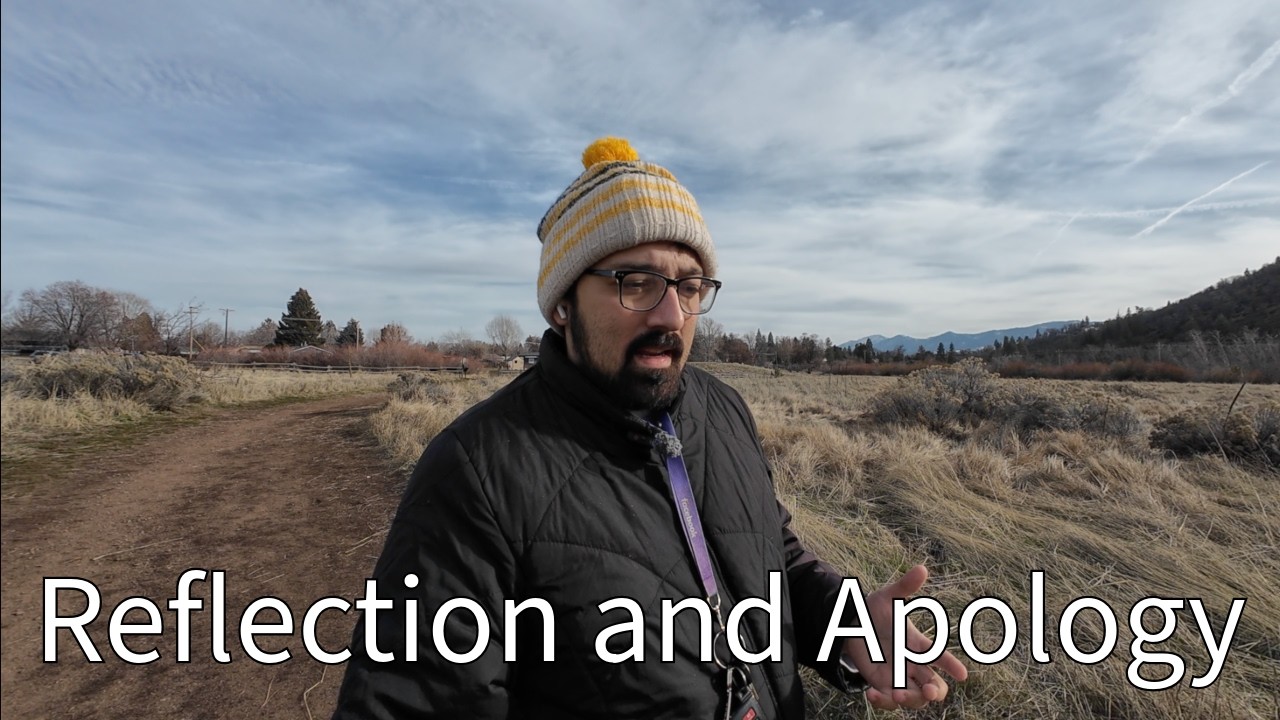
Hey YouTube, Alex here and this is going to be a more reflectively toned video.
I wanted to apologize for the grievance narrative that I came across as having when I came back to the US.
And I wanted to take time to reflect on that and share my thoughts on that.
Why I think some expats go through that stage of their experience.
I hope that this helps to shine yet another light on the lifestyle choice, the lifestyle preference.
So, let's go ahead and get into point number one.
I think that for many of us going overseas, we have an escape fantasy.
I've noticed this among a lot of my friends who are contemplating this lifestyle.
I've noticed this among many people who bounce back and forth.
It seems like a lot of content creators feed into this narrative as well.
And that's the narrative of the escape fantasy.
There's this idea that if I go overseas, I will escape all of my problems.
Everything will be fantastic.
I won't have to deal with whatever it is that it's gone wrong in my life.
And for most people looking to move to another country, there's something that they feel like is missing.
A friend of mine who I would call one of the more welladjusted guys living overseas admitted, "I came here in search of something." For most of us, we have the idea, hey, we're going to find love.
We're going to find a beach lifestyle.
We're going to find a reduction in economic pressure.
We're going to be well embraced by the locals wherever we go.
Just as is the case in the United States.
United States, I know politically it's tense time.
I find that a fair amount of my friends who are immigrants feel decently wellreceived here.
All things considered, they found professional opportunities here.
When we Americans, but you could say the same for Australians, Canadians go abroad, we aren't necessarily welcomed in the same way when we're going to these countries that are not historically settler countries.
Part of this occurred with me because prior to my two-year stint in Southeast Asia, I had done visits between like one and three months.
But this isn't really enough time for reality to set in.
You're on uh more of a budget when you're doing those shorter duration trips.
You're moving around more.
You're meeting a lot of different people.
You have these rosecolored glasses and everything's really new to you.
That was something that's really big for me.
First time I set foot in Thailand, it was like a whole another world.
I mean, [snorts] everything was incredible.
The natural beauty, the neon lights, the beautiful women, the fresh Thai food that I could have for pennies on a dollar compared to back here in the States.
Everything was incredible.
And that first visit about eight years ago now is permanently burned into my mind.
I'll never forget that.
It was incredible the adventures I had.
Chiangg Mai was a magical time back then.
It might have been called peak mai.
You had a thriving digital nomad scene.
The city was super lively.
This was precoid.
There was a lot of late night hotspots.
It was just an incredible place to be and it still is.
I I still love Chiang Mai.
I still think it's an awesome city.
But that first impression with a wallet full of cash and this naive perception of the world really made for a once in a-lifetime experience.
I mean, everything was incredible to me.
just the idea that people rode motorbikes and not in cars.
And when I tried to tip my cab driver, he tried to hand me the tip back.
There was so many instances of that.
And when you have those memories as your first experience when you go abroad, they're the reality that you know.
That's the only point of reference you have.
There's not that many Thai people in the United States.
I haven't actually met a Thai person in the United States.
I have Thai friends that have lived in the United States, but I met them in Thailand after they completed their time there.
You build up this fantasy of like every single day when I live there, I'm going to go out to nice restaurants.
I'm going to go on dates.
I'm going to live in a modern condo.
I'm going to live a 24/7 365 vacation.
And living in Thailand is not like taking a vacation in Thailand.
It's still wonderful.
I still plan to do it when I retire.
But when you stay there long term, you start to realize it's a country.
There's a lot of awesome things about Thailand, but there's still some trade-offs.
There's still some limitations.
As an example, when I was there on a tourist visa, I didn't have to worry about my visa.
I just landed to the airport, I was granted my 30-day visa, and that was it.
There was no concern about, hey, do I need to go back?
When do I need to go back?
What kind of paperwork do I need to bring with me?
It was just in stay 30 days, leave on the 30th day.
didn't think twice about it.
Well, when I was staying as a resident, I started my visa in Bangkok and I moved around the country, but every few months I'd have to come back to Bangkok and process my visa, which is fine.
I knew that going in.
But what I discounted was, hey, you're going to have to spend this time to meet this requirement or this responsibility before you continue with your adventure and your journey.
That's different from I'm going to have fun for 30 days.
It's like, okay, now I've got to do chores.
When I was there for 30 days, I think that I had a laundry machine in my room.
Some cases I didn't.
Some of the places I rented when I stayed longterm, I had to go across the street or I had to go around the corner.
They may not have had a laundry machine on site.
So, it's one thing, too, when you're on vacation and you can just hire a laundry service.
You don't think about it.
It's another when you're living there and you're like, "Oh, man.
I really wanted to go out right now, but I need to wait for my clothes to dry." And I get it.
at a certain budget, you don't have to worry about these things.
But most people aren't in vacation mode for years on end.
Most people, they take a break for a week.
They get back to the grind, especially in the United States.
Most people only get two weeks a year.
So, you're kind of limited there.
Ultimately, what you realize when you're living somewhere longterm is that it's not the fantasy.
I had a conversation with a friend of mine when I first landed in a country that he lives in.
I'm not going to name him.
I'm not going to name the country.
I said, "Man, this place is paradise." And he corrected me.
He said, "This place is not paradise." And I thought, "What does he mean?
It's beautiful here.
Like, it's awesome here.
I I love it already." He had the years of experience to reflect on the tradeoffs.
There's no place where living is going to meet the fantasy.
What we're really looking at here is tradeoffs.
What do I get and what do I give up?
I get XYZ, I give up ABC.
That's what caused frustration on my part as I realized, hey, this isn't matching that fantasy.
I think too, to be fair to myself, COVID happened.
A lot of countries aren't really what they were before CO.
It hurt the nightlife scene in a lot of places.
It raised prices.
People were stuck inside for like a year.
Brought a lot of people down, I think, emotionally, mentally, etc.
So, this 2 years was my first long trip in Asia postco.
I was actually in Bangkok when CO kicked off.
But as far as a long trip back, yeah, that was the first time.
I didn't really notice the changes at first.
The next point would be the cultural mismatch.
In the United States, I generally get the culture.
I've lived in three different states.
I currently live in California.
And I have some sense of the norms.
I know how to navigate the system.
I know how to travel.
I speak English as a native speaker.
There's not really much mystery for me here in the US.
Everything basically works the way I expect it to work.
There aren't too many surprises for me here.
I grew up in an AsianAmerican household.
I thought, you know, I know Asian culture.
I understand it, but I didn't understand it.
You see, there's American culture, what a lot of Americans grow up in.
Then there's Asian culture, what a lot of Americans don't grow up in.
And then there's a third culture.
And that's where I fit in is I would call myself a third culture person.
What does third culture mean?
Well, I don't really fully identify with Americans.
I don't really fully identify with other Asian people, ethnically Asian people.
It's more of a mixture of the two.
And it kind of depends on how the person was raised.
But I realized, man, I still have progress to make in adapting to Thailand.
when I was having a conversation with some Thai friends and I expressed an opinion, which Americans, most of us are pretty opinionated.
We don't hold back.
We share our opinions.
We're very direct with them.
We're used to having tolerance of being able to express what's on our minds and not always really thinking about it.
I think that's changed somewhat, but it's still pretty open where I said my piece and I was cut off and my friends explained to me, "Hey, shut up.
You don't need to say that." Now, it wasn't anything that was illegal.
It wasn't anything that would get me in trouble, but it was something that you [snorts] might say is socially inappropriate in Thailand.
That was awkward.
It was embarrassing.
It was might even say a little bit humiliating.
And it was a wakeup of like what?
I thought there's this episode of South Park where Sans's dad Randy says, "Oh, I thought this was America." And uh you think that, right?
Cuz a lot of us, we think about Thailand as being a very free place.
And I certainly feel more free in Thailand in many ways than I do here in the United States.
But yeah, I I was embarrassed and that that took me down a peg.
I'm thinking internally there's part of me that's saying what I can't say what's on my mind.
I I thought that I knew how things were supposed to work here.
I thought I knew what was and was not acceptable.
And there's so many layers to these cultures and societies that even when you think, "Oh, I'm in the right.
I haven't done anything wrong." Well, yeah, if you're in the US, you probably would have been just fine.
But outside the US, it's just not what you're used to.
And I think when you go there on vacation and you're only interacting with service employees, you develop a kind of an attitude cuz you don't really get into deeper conversation that, oh, this is like America but better.
That was embarrassing.
And I thought, what?
I have to watch what I can and can't say.
America, I say whatever I want.
Now, of course, when I am in the states like I am now, I conduct myself in a professional manner.
I don't try to insult or belittle or degrade anyone based on any of those factors.
You still have opinions even as much as like what do you prefer, vanilla or chocolate ice cream?
I learned opinions are just not really as valued as I am accustomed to.
Right here, a customer is always right.
Customers have a lot of choice over what it is they want to buy.
They influence the production of consumer goods.
That's the kind of relationship that Americans are accustomed to.
I tell you what I want, you make it, I buy it, you get the money, we're all happy.
It's not like that everywhere.
The next point would be an entitlement mismatch.
When I went back to Thailand, I expected the magic of my first trip.
I expected it to be just like it was the first time I went.
I remember the first time I went, I landed in Shiang Mai and I went to my condo rental.
I walked down the street to see my buddy Jesse who introduced me to the idea of going to Thailand.
That was magic from start to finish.
It was just a blast.
It was so much fun.
That wasn't the case.
When I landed, I was trying to get on my long-term visa.
I also wanted to explore Padia.
So I was doing multiple bus trips back and forth to from Padia to Bangkok.
That's like two two and a half hours each way.
I thought what you know like when I came here as a tourist I didn't have to do any of this stuff for my visa.
And I learned hey I'm not entitled to any kind of special visa uh circumstance.
I responsible for following the rules just like everyone else which is fine.
I complied and I wasn't angry and I didn't get an attitude.
Entitlement is not an external issue.
It's an internal issue.
Another instance that happened was that I went to meet with some Thai friends when I first made it to Bangkok preparing for this long duration trip this year in Thailand.
And I was really excited.
I told my friends, I'm staying.
I figured things out.
I'm going to stay for a year.
And I expected, for whatever reason, in my mind, a round of applause, cheering, wow, this is the most incredible thing anyone has ever done.
And I got just, oh, okay.
Flat [laughter] response.
And that was on me.
I didn't realize, well, this is a country that gets millions and millions of tourists every year.
Yet another tourist is to be expected.
There's nothing really remarkable uh about the idea of trying Thailand for a year.
At this point, maybe 30, 40 years ago, that was considered more cavalier.
But in today's day and age, Thailand has great internet access.
Thai people have some sense of the foreigner positive perception of Thailand, wanting to live in Thailand, wanting to spend a time in Thailand, falling in love with the country.
I suppose if you live in like Orlando and you're regularly meeting people that say, "Well, you know, I came here to Disney and I decided I wanted to live here." And they expect you to be like, "Wow, yeah, I love Disney, too.
I moved here to go to Disney every day." That's not really the reality for most people who live in Orlando.
They have jobs.
They have responsibilities.
They've got financial stress.
They've got a lot of things going on in their lives much more so than to be like, "Oh, you know what?
I'm going to take vacation and I'm going to escort you around Disney." Maybe some people they have generous vacation and they can use it, but for a lot of people it's like, "Oh, that's awesome.
Well, I got to got to go home.
I got to get up for work tomorrow." That was another thing that I think caused me to stumble.
And like I said, I love Thailand.
I still plan to retire there.
These are some hard lessons that I had to confront and come to terms with.
By the way, if you're enjoying this video, if you're still watching, please subscribe down below.
Please give us a thumbs up and comment.
Did you reach a point where maybe you had some level of concern or frustration with your new country?
I think some is natural.
I think anywhere you live a healthy amount is totally to be expected.
But when it goes into too far, then it takes time for self-reflection to move beyond that.
I just had the thought in my mind, I'm in Thailand.
What do you mean it's it's okay?
This is amazing.
This is the best thing I've ever done.
This is a thing I've wanted to accomplish and pull off for a while now.
It's [snorts] beautiful.
It's special.
It's magical and it has been a really healing place for me.
For people that live that day-to-day lifestyle, they've got responsibilities, they've got chores, they've got bills, they've got challenges.
And it's funny cuz in turn, some of my Thai friends, they really love the United States.
They want to come back.
They feel about the US like I feel about Thailand.
So, it's just kind of funny to see that dichotomy.
And I'm like, why would you want to come here?
It's expensive.
It's stressful.
It's boring.
Why would you want to come here?
Like, I think they feel better about Thailand than I feel about the US at times.
The next point I'll make here is that I think that transactional environments can amplify the sense of being a victim or the victim mindset.
And it's something that due to my own trauma, I've struggled with for a long time.
It's something that I don't like about myself, but I'm working on it.
Part of that is trying to be a more high agency person.
But that being said, when you're bouncing from tourist spot to tour spot, you're going to get that sense of transactional exchanges because people move in any country to work in the tourism industry.
So like here in the states, people move to the Colorado mountains.
People move to like I mentioned Disney earlier.
People move to Miami Beach, New York City, wherever it is in the country.
There's people that are going to move there to work in tourism.
And Thailand is the same way.
Most of the people I met in Padia, for example, were from the north.
So I saw a dermatologist.
She happened to be from Chiang Mai.
I had a massage therapist.
She happened to be from I think Ean somewhere in the north.
I don't remember the exact location.
Basically, your interactions are transactional.
If I go out to a restaurant, the waitress isn't going to like fall in love with me just for the privilege to serve me a meal on a plate, right?
She's there cuz she's got family, she's got bills, she's got responsibilities.
Here in the States, it's not so transactional.
Like, I have friends that I work with.
My friends aren't responsible for my work.
I'm not responsible for their work.
We just get along, enjoy joking around, having fun.
We get together after work, go for hikes places around here in Northern California.
We go to the nearby cities and hang out and have fun.
When you're in a country and you don't speak the language and you don't really know what people are saying, you are reduced to transactions.
If you're hiring a taxi, the taxi driver is not suddenly your best friend.
They're friendly.
And I'm not trying to put anybody down, but people got to work.
I mean, I've worked a four or five different jobs at least and I have a transactional relationship with my employer.
I appreciate them and I'm willing to work hard for them and I'm sure they appreciate my services and they are grateful for my contribution, but at the end of the day, they need certain things done.
I need money to live.
We exchange value and it's fundamentally a transaction.
They appreciate me as a customer.
They provide good value to me as a consumer, but ultimately it's transactional.
You have both in your home country when you move to a new country and you're not going to get a job.
Foreigners can't work in Thailand without a work permit.
You can't speak the language, but you still got to consume.
You still got to do half of that equation I mentioned.
You still got to get an apartment.
You still got to eat.
You still got to get around.
You kind of get into this consumer mindset and you don't necessarily produce to match that because it's a much more economical country when you have foreign currency.
So, I think some of that feeds in the entitlement as well.
But yeah, you start to feel like, oh, I'm just a number, right?
You can't have in-depth conversations with somebody where like, I don't speak Thai.
Some type Thai people don't speak English.
And if they do have English, it may be more related to their job.
Uh, not so much more in-depth personal type of discussions.
And so I think that's where some expats do get frustrated like man I expect to make all these friends but I find that I can't speak the local language.
I tried I really tried put a lot of effort into learning but it's so different from my home country's language that I just couldn't get it together.
I couldn't make it happen.
There's growth beyond that but I don't know that I made it to that point.
Maybe I will in retirement.
I hope that I do.
I' I'd like to to make it beyond that point psychologically.
The final part of this video is a lot of us bring unresolved trauma with us.
And I think for some of us, we don't put the work in.
We don't go and get a counselor in the new country.
We don't get a therapist to try to talk things out or discuss some of what we're going through.
I think a lot of expats have this tough guy persona where they feel like, look, I have the confidence to move to an entirely new country and I don't need no help.
I don't need someone to talk to.
They keep their conversations with their significant other pretty surface level.
They just have this internal trauma.
Everyone has trauma.
We've all been through difficult situations.
When you're at home, at least you have co-workers you can talk about it with, right?
man, that was a tough day at work.
Or, hey, you know what?
Better luck tomorrow.
But even then, there's a limit.
You don't want people to think you're weak.
So, you have expat friends, but you're thinking, man, if I tell this guy what I'm going through, he might just tell me to toughen up, to grow up, to be a man.
So, some of these things get unresolved.
Like I would say one common thing is modern life in America can make men feel like they're not doing man stuff or whatever.
A lot of us have office jobs.
We're not we're not law enforcement officers.
We're not going out there hunting or doing things that you might say a tough guy would do.
And so we're looking for that country, that place where things have not changed as much socially, where it's more along the lines of, hey, I can be a leader.
I can live the way I want to.
I'm not as beholdened to bill collectors.
I don't have to deal with a boss who tries to put me in my place.
We go with these expectations of becoming the person who we think is our ideal self or who we really should be or who we really are deep down.
We don't have the tools to sort that out.
That's where we become frustrated.
Like I have friends in other countries that they don't love their jobs.
Sometimes you see injustice in other countries and you have to just accept it as an expat.
They don't really encourage expats to voice their opinions.
There's not really a path to becoming a citizen.
And so, while I think expat life is very enjoyable, I think more people should take a look at it.
I think it is going to be the path that I choose in retirement.
I also consider that there's a lot of internal work that I need to do and things I need to work through and sort out to ensure that I will be happier when the time comes for me to make the permanent move in spite of my frustrations or challenges.
It's what I'm looking forward to.
It's what I'm working toward.
It's why I'm attempting to save and invest my money that I don't use to live on the excess, the leftover from my paycheck.
That way, I can live the way I want, but with a more level head going in understanding all these issues I mentioned.
Hey, yeah, you're living a vacation.
Expect a decent amount of people to be all business.
It's not a an issue.
uh expect that you're going to encounter some things that aren't the way that you're used to.
And I thought I'd figured it out.
I'm like, "Oh, you know what?
I'm young.
Doesn't matter.
I can adjust to whatever.
It's all good." It was all good until it wasn't.
And so now I know what to prepare for.
But anyway, thank you so much for watching.
I hope you all have a wonderful day.
See everybody.