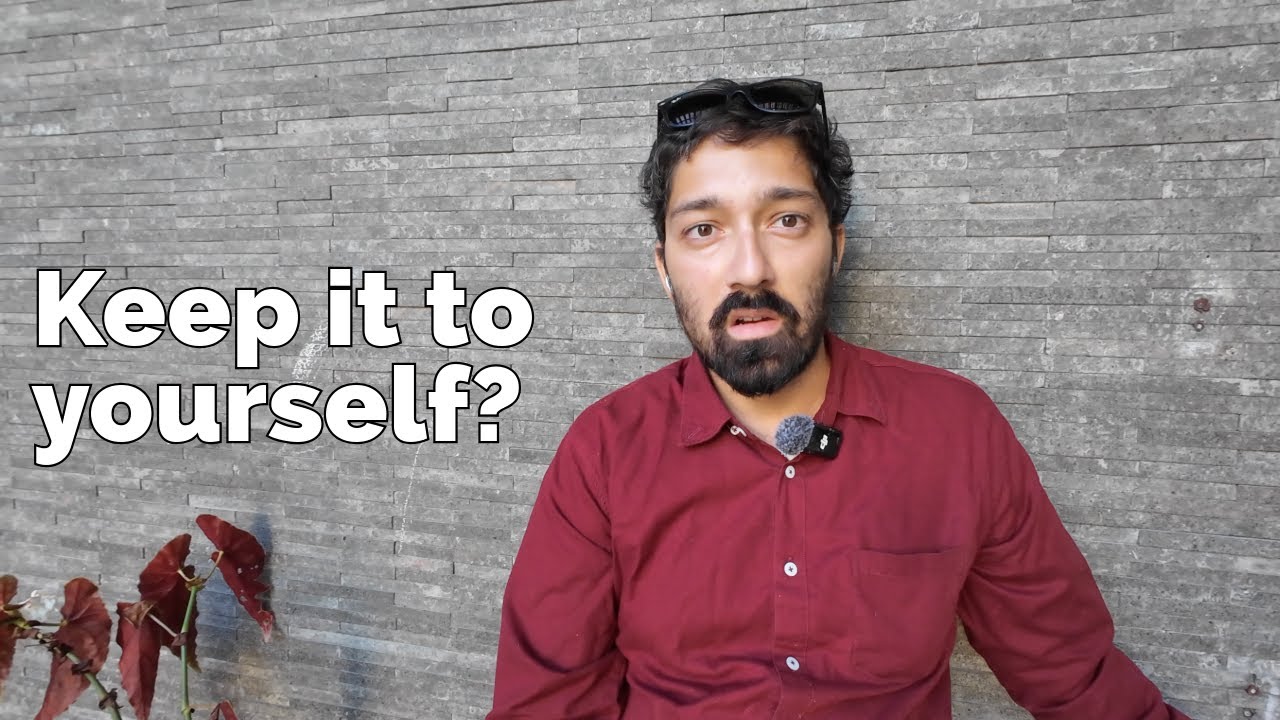
Hey YouTube, Alex here and in today's video I want to answer the question, why don't YouTubers tell the truth about Southeast Asia.
Really any travel destination, but I think like Asia broadly speaking is uh one where you get a lot of I don't know if misinformation is the right word, disinformation, whatever you want to call it.
And so stay tuned and we'll talk about it.
So in this video I want to answer this question because I've had people reach out and say, "Why don't you vloggers tell the truth?
Why don't you be more honest?
why don't you say what's really going on?
And the short answer is that we don't have freedom of speech over here.
So, this is a big thing that American people and really Western people in general, uh, but people from many countries don't understand that not all countries have freedom of speech.
And they take that to mean that what's the word?
You're just bound by law.
But it's not just that you're bound by law.
It's also cultural.
Like a lot of countries that people consider retirement destinations or places people like to go, uh they're more focused on social harmony.
You think about a region like Southeast Asia.
These countries don't want the confrontational culture of the West, the US in particular, where you see people arguing in public, fighting in public.
Uh this really hit a peak during CO, but I'd argue uh it's still a major thing now.
A lot of these places don't want that.
They want people to generally get along.
They want a sense of order.
They don't value argumentative people.
They don't value this idea that we're going to figure out what's really going on because that comes at a cost, right?
So yeah, in the US to some extent they have freedom of speech.
I'd argue it's more muted than what people really let on because you know I've been asked in jobs before, are you willing to lie?
as in you need to lie to keep your job.
Uh you need to lie as a function of your job.
That's a whole other discussion.
But you know, so it's not really codified.
Uh where over here you can't just go and start talking about a number of different subjects.
In some cases like the Philippines, um this isn't to pick on the Philippines.
It's just an example.
But on your tourist visa, you're not allowed to discuss politics.
You're not allowed to discuss Philippine politics.
It's not welcome.
It's not acceptable.
It's unlikely to change anytime soon as far as what I could tell and I'm not counting on it changing.
Uh and so you know foreigners they go to the Philippines and like wow these people are so friendly and they're so nice.
They don't understand that that's a function of a more harmonious society.
That's a function of a place where people have made a decision.
They have made a decision where they would prefer not to have a lot of conflict and meltdowns that come with free speech in the US.
I found a lot of the times in the US free speech is an excuse to be rude, to be disrespectful, to insult people.
Look, it's free speech.
It's free speech.
But for some viewers, they are offended that people don't come out and start talking about taboo subjects that could put them at risk.
So like on one hand, I I get frustrated because I feel like a lot of vloggers are deceptive.
On the other hand, they're not really permitted to be honest.
A lot of subjects that they would be being honest about, they're not permitted to talk about.
And so they stick to certain topics, mostly dating or food for example, that are not off limits.
Uh but they don't really give you a sense of what it's like to live in Southeast Asia.
So really, if you want to experience it, you got to come for yourself and have your own observations, maybe doing your own research, watching documentaries, coming from professional operations because, you know, a lot of these vloggers operate as salespeople and sales people are bound by law.
like you know they can like in the US I I mentioned before in sales roles I've been encouraged to lie but there's only so much I could lie about if that makes any sense philosophically speaking I think it does make for a more peaceful society it's not necessarily what I'm used to coming from the US but you know these people saying why don't you tell the truth they're not willing to come out and blog about it right you'll never see uh any of these people that go after uh vloggers and I feel like I can make some critiques because I'm part of that community, right?
Like I put myself out there, but some people, you know, they just they know why, okay?
They know why you can't tell the truth.
They know why you can't uh engage in that kind of discussion.
You don't have freedom of speech.
You're not permitted to discuss your truth.
So, I just wanted to share with you all like why I think that is the case.
And it's not all bad for me.
Trying to navigate what I can and can't say in spite of a lack of freedom of speech has been challenging.
It's not easy to figure out what's going to offend people, what's not going to offend people.
And so I found a lot of my conversations here, particularly with people who are not also foreigners, to be very shallow uh and repetitive.
Where are you from?
Where are you from?
Are you married?
Are you single?
How long are you here?
and over and over and over again.
And some of these conversations can get really tedious because you just can't get really far beyond that.
You can't really share or discuss your opinions.
Uh if something's bothering you, you know, there is that element of well, you're not really allowed to speak your mind.
Your opinion is not really welcomed.
Uh, and I've had that experience a number of times throughout Southeast Asia where I don't know if you call it toxic positivity, but it's almost like, oh, we can't we can't talk about that.
That would hurt somebody's feelings.
And so that's something that a lot of people don't talk about is the price for social harmony.
The price that expats or foreigners pay in other countries is that it can really get to be socially isolating after a while where it's like, okay, I'd rather not go through this song and dance of shallow communication because I think for a lot of Western people, we use conversation for different reasons.
Uh for me personally, I like to have productive conversations.
I'm not really big on small talk forever, right?
Like I eventually want to have deeper relationships with people, but I feel like when I can't speak my mind, some of the times just like what's the point?
Why are we why are we going through these pleasantries?
Um, I'll probably never see you again.
I saw a lot of awkward situations where people try to bring their confrontational western attitude over here and just kind of stumble through these interactions where they want to fight and let off steam.
I've talked a bit about this before with problem expats.
They want to fight and let off steam.
They can't do that with the local people and so they get into it with each other.
like they have this bottled up frustration because, you know, I had somebody call me on it and say, "Oh, you're engaging in in passive aggressive behavior." Over-the-top aggression is not welcome.
You can very easily end up in a major legal debacle in many different countries from trying to solve a a problem through aggression.
And so, I think a lot of people uh end up just kind of steaming.
A lot of these people are not used to being a foreigner.
Uh they're used to living in their home country where they feel like, well, I've got home turf advantage.
Uh and then they think that because they may have some financial means when they go overseas, that home turf advantage is going to be easily recreated.
Well, I've lived here.
I've had expats tell me, "I've lived there for 20 years." It doesn't matter if you live there for 20 years.
Uh there are people that run into issues well into a decade plus into living overseas because they can't ever fully give up their western culture, their western mentality.
And I'm not like necessarily faulting people for that, but I think it's important to have that self-awareness where I got the sense after a while some of these people, they don't actually really like it here.
they tolerate it because of the low cost of living, right?
They don't really enjoy trying to adapt to culture, especially as you get older.
Like, I think it's one thing if maybe you move to uh another part of the world as a teenager, a kid or something, and you have your formative years where you can kind of adapt some of those cultural patterns more easily.
In my 30s, like I realized I'm not an American, I'm not an Asian person.
I'm in this third culture bracket uh where I still in some ways is very culturally American and there are things that didn't bother me earlier on in my trip but but the more time I spend over here the more I'm like man that's that's going to be a problem having to keep my mouth shut it's just a tradeoff right it's just like people people see the harmonious societies and they think that it's like a perfect solution.
They don't understand the consequences that come with that.
Or maybe they do see them, but they think they could ignore them.
They could try to uh pretend they won't affect them.
Oh, I'm retired now.
It doesn't matter.
But when you're in the West, you're trained to be confrontational, to confront problems.
Anybody that's had to work in the US, they're told at work, you're doing this right, you're doing this wrong.
you're getting corrected typically in a job on a consistent basis.
Especially when you're early on, maybe less so when you're uh mid-level or higher, but definitely early on, then you're trained a certain way.
And if you're doing something wrong, people will tell you.
Uh but I found in other cultures, they don't really like to be told they're doing something wrong.
It tends to hurt people's feelings.
People get upset.
People could get very angry.
they feel a loss of face, which is something else I need to talk about is the face culture throughout Asia, not just Southeast Asia, but all over Asia, the the saving face culture.
But yeah, I just wanted to address this cuz when people talk about like, oh, you're not being honest, you're not telling the truth.
Uh, one, we're not permitted to speak our mind.
There's a number of situations if you come and live in Asia, um, East, Southeast Asia, where your opinion is not welcome unless it's positive.
It's your opinion is not your opinion is only welcome if it fits the mold.
Basically, there's there's a set of acceptable opinions that you can hold or vocalize more specifically.
And anything outside of that is not tolerated.
So, it's not like the US where and I I've had somebody get upset for me saying, "Yeah, I got sick.
I think I drank some bad water." Because me saying, "Oh, I drank some bad water." was an an insult to them and to their culture.
Like, that's how it was perceived when I'm thinking, "I just drank some bad water.
I'll get over it." Uh, but yeah, that was something I ran into.
Making what I thought was small talk.
This is something if I was in the US, I'd have no problem saying, "Oh, yeah, you know, I was hiking.
I I stupidly I didn't have my life straw.
I drank some water from this creek and now I'm I'm sick.
Ah man, that happened to me too.
Whatever.
We'll get through it.
No, I mean so so I feel like it's it just changes from one stress to another.
I I I don't feel like it's stress-free living in the way that it's sold or the way that it's made out to be.
If you're somebody that has this sense of I don't know the guilt culture like in the US we want to stand up when we see something happening that we feel is wrong that's not you can't do that you can't do that uh in Southeast Asia at best you're going to probably hear look you're a foreigner if you don't like it go home go back to your home country we don't want to hear it like you're not from here that's just something to keep in mind anybody tells you you know if you're a vlogger you watch vloggers in Southeast Asia and there's all this argument about they're not telling the truth, they're lying to you.
In some ways, I feel that in some ways I've gotten really frustrated.
I know I made a video recently about it.
I sat down, I thought about it after a while.
I'm like, well, they can't tell the truth.
Um, they have to keep their mouth shut.
And I just noticed it because a lot of content gets repetitive and I find myself watching less and less Southeast Asia content over time.
Uh, because I feel like it's just redundant.
How many times do I need to watch a video on dating?
How many times do I need to watch a video on fruit?
How many times do I need to watch a video on budgets or restaurants or uh tourist destinations?
These topics I could only cycle through so many times.
So, I watch a lot of Western media over here actually because it's more relatable.
It's more uh into other topics that I'm interested in like criminal justice or psychology or science related topics, history, geography.
A lot of topics that, you know, I can't speak the local language here.
So, you know, the context is missing.
I can't speak the local language here, so the context is missing.
Anyway, I'm rambling a bit.
But I wanted to make a video talking about why vloggers don't tell the truth, why people keep their mouth shut about a lot of subjects, why on one hand some vlogs feel like a waste of time.
Uh but on the other hand, it's like okay, well people, you know, people want to promote, right?
like they want to market like these countries.
Living in these countries has say living in these countries has solved a lot of problems for a lot of people particularly retirees dealing with massive inflation in the west uh cultural problems dating issues all these things but on the other hand you know they can only really talk about the upside because the opinion about the downside is not really worth it.
One thing I can say I am permitted to talk about is the heat.
I mean, if you come over here, you have to be ready for the heat.
It's hot throughout most of Southeast Asia most of the year.
It's not something that goes away.
It's something I'm actually excited to be going back to the US uh in one sense uh because I know I'll be able to experience some cooler temperatures and that's something I haven't experienced in a while.
And anyway, let me know what you think down in the comments.
Have you noticed this sentiment?
Have you had this feeling?
It's just something that's been on my mind ever since I made the video, calling out some of the deception I see on the parts of vloggers.
I've seen some other people cover this as well, thinking, well, yeah, on one hand, I feel like it should be called out.
On the other hand, there's not really a real solution there, is there?
Um, anyway, give us a thumbs up if this resonated with you and subscribe to the channel down below if you want to see more content like this and we'll see you